Friday, March 3, 2023

Backyard Retreat & Woodland Adventures

Dry play yard, decorative and functional stream
with a woodland adventure area behind

Wet + Shade + High Traffic

These things never lend themselves to a healthy lawn...  A lawn is definitely something the homeowners wanted out of this project for their kids' soccer and football games.  But in addition to the lawn, they wanted a space for creative play, keeping or expanding the existing vegetable gardens, increasing the numbers of edible berries and plants, all while doing it in a natural and earth-friendly sort of way.


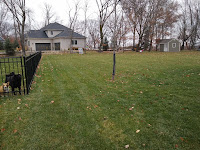
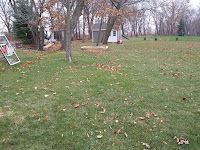
Before pics-

Heavy shade, traffic and excessive moisture
make turf grass struggle to thrive


Deeper shade and low growing branches
Garden space, with bland spirea along the house


These bushes on the back window were lanky and just not very interesting, they were hoping for something better, maybe even edible.  The blueberries they already had were doing great!  We decided on a trio of 'Regent' Serviceberry for variety, a hardy native that also produces delicious berries.


This area was also in heavy shade from a maple tree with an expansive canopy.  Grass had always struggled along this access area in and out of the backyard, too.  Maybe we could use the 'problem as the solution' and just take the turf grass out of the equation for this part of the yard?


Solutions- 

The shade was hindering the lawn from drying out, but the cause of the initial wetness was downspouts pouring into the yard, shallow slope preventing proper drainage and a large amount of runoff from a neighboring hillside.

We could reroute the runoff from both uphill and the downspouts, utilize the city rebate program and create multiple spaces for adventurous play, pollinator habitat and a natural feeling space that felt more like a nature park than the suburbs. 

Many shrubs had volunteered along the back property line, including dogwood, mulberry and highly invasive honeysuckle.  We removed most of these, except a few pagoda dogwood that happened fit where they were.
I love using the stump bucket to remove honeysuckle!

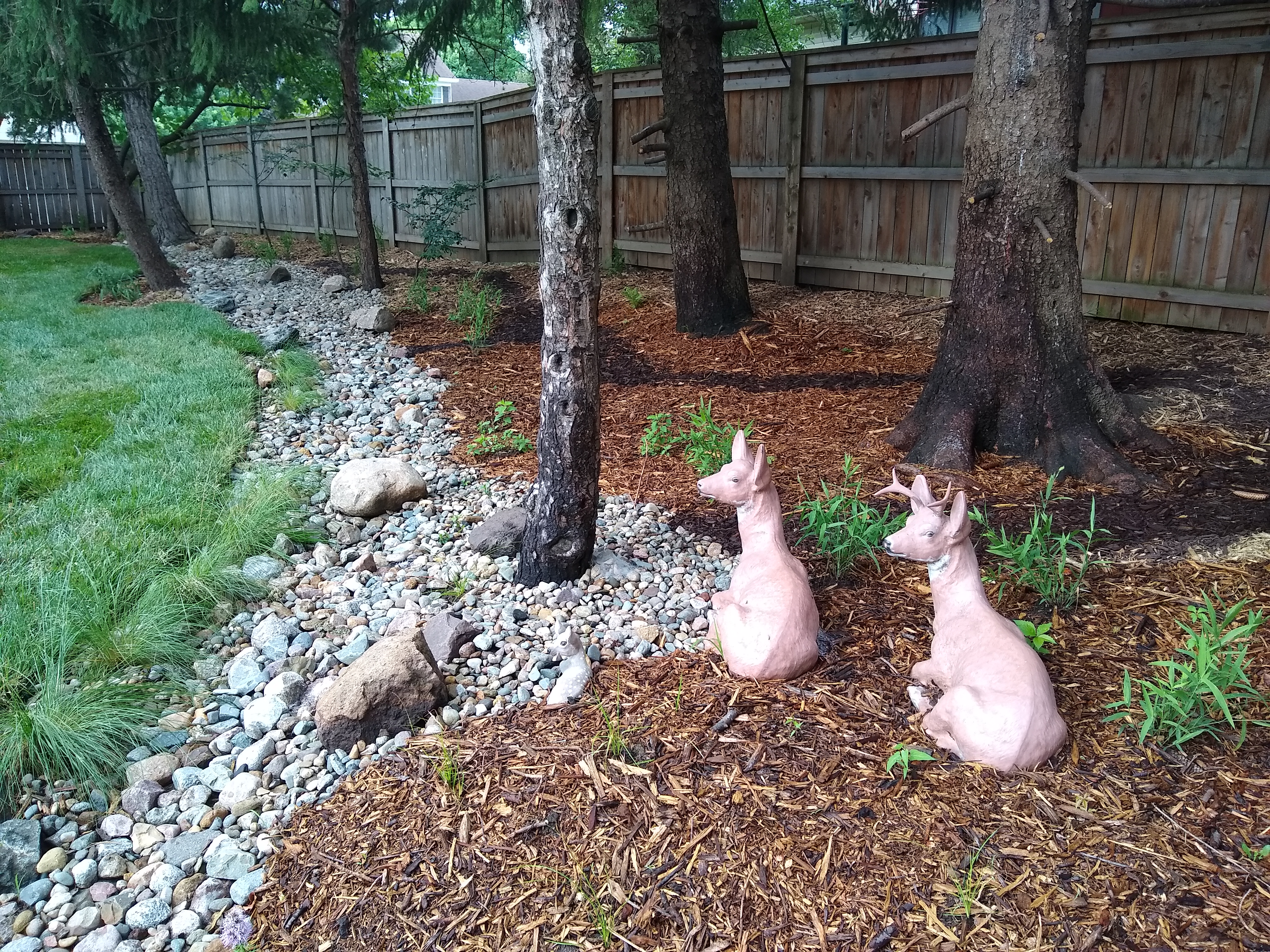
We raised the canopy on the evergreens to open up the feel, leaving some climbing rungs for tree borne adventures.  You can also see the grading for the swale that will push water to the rain garden and away from the lawn.

A designated walkway - the "jungle path" as the kids called it - was made using a darker shade of mulch, which will allow traffic in the area but keep the new plantings from being trampled.
Tripod sprinklers kept the newly installed plants and sod
hydrated during the long, hot and dry peak of summer.

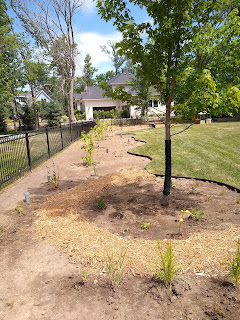
Stream installed, fescue sod going in for the final touch

A rain garden captures the runoff and sinks it into the ground
instead of flooding the neighbors and storm sewer system


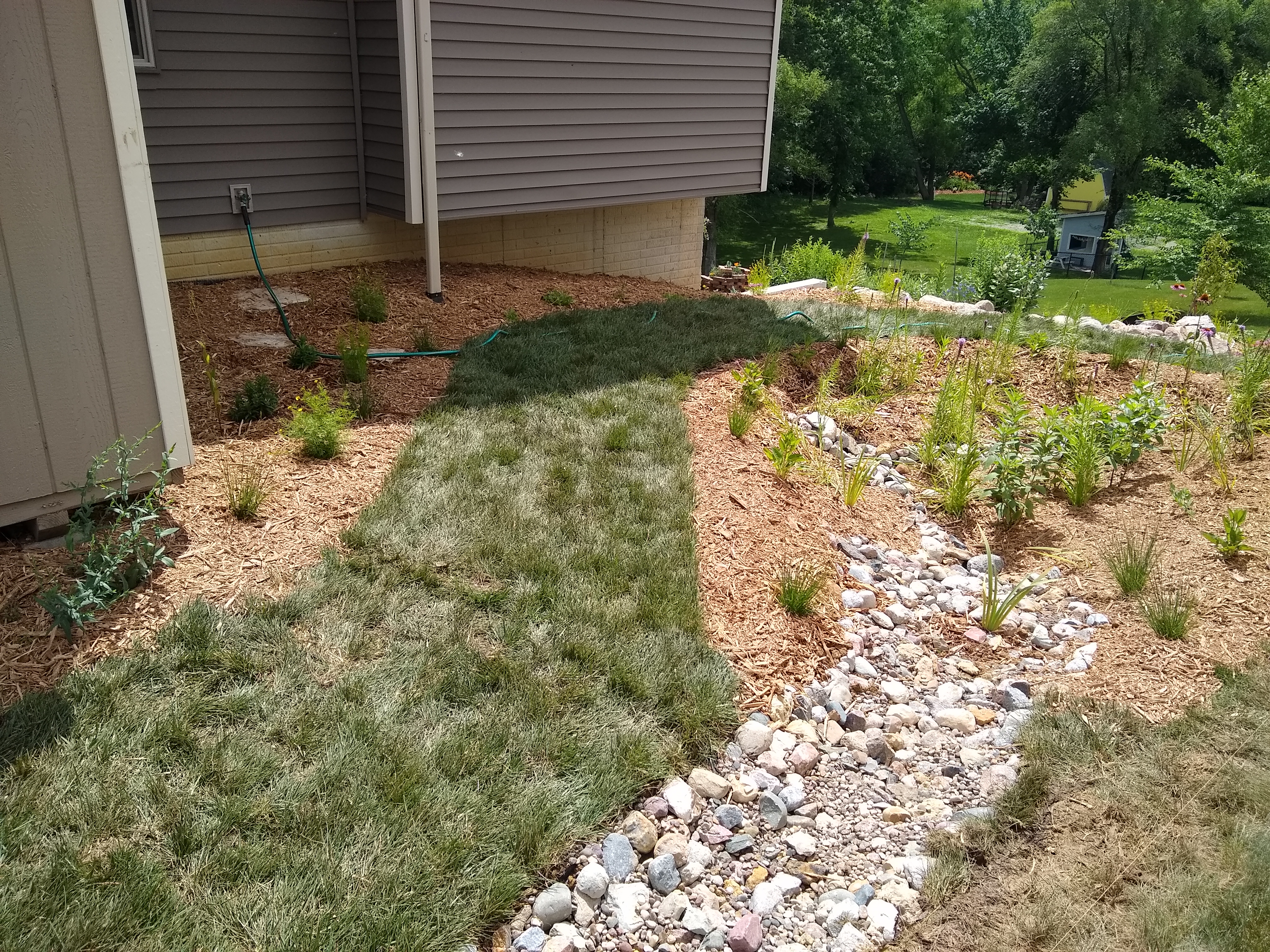
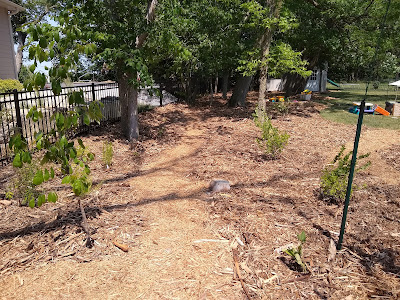
Remember the shady access way where grass struggled?  We created a woodland garden with a limestone path for access.  We were lucky and could use mostly reclaimed limestone steppers found under the volunteer shrubs.  The nearby downspouts were routed to this space where native shade loving plants won't mind the extra moisture - including ferns, sedges and wild geranium.  A couple gooseberry shrubs won't mind the shade either and provide a seasonal snack for adventurous young explorers.
Shade tolerant access path planting


In addition, the front planting island around the flagpole was overgrown with a massive burning bush (also invasive), volunteer mulberries and plastic edging that had seen better days (no before picture).  Tumbled granite added an updated and durable edge to this bed.  All of the existing vegetation was removed and replaced with Midwest native plants, like an Aronia bush and New Jersey Tea tree.  Butterfly milkweed, rudbeckia and echinacea were among the flowering forbs, with switchgrass for height and textural contrast in the center and fronted by lower growing clumps of prairie dropseed.


The shade on this project was very welcome during this summer's heat!
Thursday, February 16, 2023

Best of Houzz 2023

Thrilled to share that Abundant Design is a Best of Houzz 2023 winner!

We’re so proud of all the team has accomplished and honored to be recognized for the hard work we put in on behalf of our clients.


Tuesday, February 7, 2023

Epic Permaculture Backyard Retreat p2

Not many projects bring in so many elements onto one property.  This was an ambitious project and one that checks a lot of boxes by integrating stormwater management and permaculture guilds with traditional landscaping elements!

Permaculture design provides a wonderful toolbox to integrate all of these elements into one cohesive design.

Part 2 of this project summary will focus on the productive parts of the backyard.

From the deck you can see many of the elements in the backyard-

    • Fruit guilds 
      • trees and berry bushes with productive and/or beneficial perennial plants
    • Annual garden, compost bin & herb spiral
      • rain barrel (for the best water) right by the garden
    • Patio & firepit
    • Waterfall
Overlooking this new productive and relaxing backyard space

The site had a very challenging slope that was difficult and dangerous to mow, with poor soil quality, erosion and soggy areas.  We finished this amazing residential project last season.

If you missed Part 1, read that here

Enhanced rain garden and dry stream bed.

This water feature is a feast for all the senses and could provide a drink for pollinators and beneficial insects like dragonflies.  The surrounding prairie planting provides habitat and attracts pollinating insects necessary for fruit and vegetable production.

Pondless waterfall with prairie planting behind

Moving down the slope, the stream separates the lawn from the peach and bramble guild.  Bee balm and thyme are companion planting powerhouses; they attract pollinators, are a beneficial part of foraging bees' diet and have antimicrobial properties that may help prevent diseases in vulnerable fruit trees.  The yarrow in the understory also attracts predatory insects, like lacewings and syrphid flies, that keep pest species in check.

Peach trees with black berries, raspberries and other
companion plantings.

Constructing the herb spiral-
 also high on the customer wish list


Herb spiral with historical salvaged bricks, rain garden
overflow stream in the background.

Herb spirals are often found in permaculture gardens and something the customer really wanted to include.  A spiral pattern is one that repeats in nature and depending on the herb spiral's size can induce microclimates that can be targeted with herbs that appreciate them.  Herbs are generally quite resilient and do well in these raised systems which can be too dry for typical vegetables.  We positioned this one near the edge of the lawn for easy access and near the annual vegetable garden.

Looking across the raised keyhole garden beds
as the sod was being finished.  With the amount of
earth sculpting, sod was needed for the small lawn.


Before - Garden space
The vegetable garden was originally located where the new patio is.  It was moved to open up the center of the yard while still keep it accessible.  It also allowed us to move all of the gardening space together.  The "keyhole garden bed" was rebuilt trying to salvage as many plants as possible.


Keyhole garden beds with composter behind.
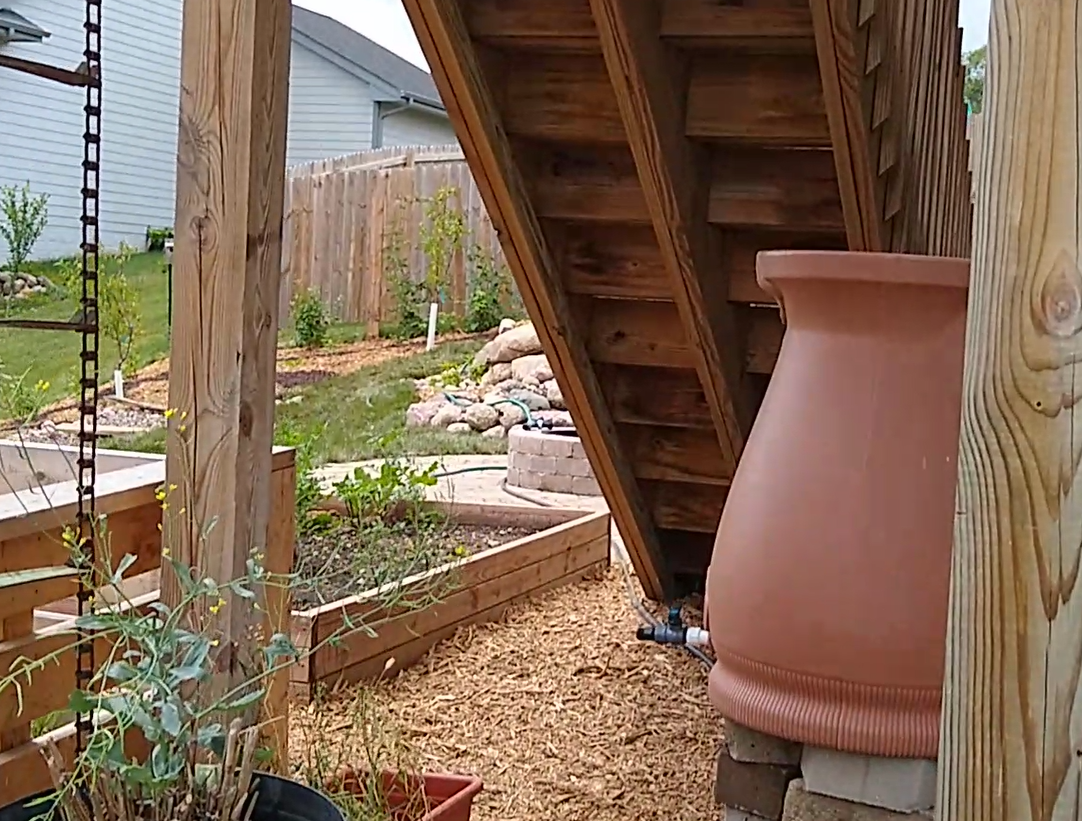
A rain barrel is on a stand behind the stairs.

The composters were moved from the shed/rain garden area here where garden and kitchen waste are easily added; and finished compost will be handy to amend the soil in the garden.  


We also moved a rain barrel from the other side so that rainwater from the downspout is captured under the deck right near the garden for use.

Native pollinator beds were already established, we just added the 
planting space on the hardest to mow areas - between the tree guilds.

Apple guild view from below

The apple guild includes rhubarb, gooseberries and currants.  Strawberries were used as a productive ground cover, along with pockets of clover for nitrogen fixation.  The tree spacing allows a good deal of sun through for fruit production but does provide shade in the afternoons which strawberries appreciate.  The swale on contour captures runoff from above hydrating the plants below.  The access paths (dark mulch) also follow the contour to prevent erosion and make them easier to navigate.

Apple guild, view from the deck -
you can just see the compost bins and garden at the bottom

Now for the understory plants to fill in!  I'm really looking forward to revisiting this yard as it develops.


#fruitguilds #raingarden #prairie #pollinator #herbspiral #keyholebed #compost

Tuesday, November 29, 2022

Epic Backyard Permaculture Retreat p1

Not many projects bring in so many elements onto one property.  This was an ambitious project and one that checks a lot of boxes by integrating stormwater management and permaculture guilds with traditional landscaping elements!

Permaculture design provides a wonderful toolbox to integrate all of these elements into one cohesive design.

In the first part of this project summary, we'll focus on the slope and stormwater issues.

Overlooking this new productive and relaxing backyard space

The site had a very challenging slope that was difficult to enjoy and dangerous to mow.  Also, poor soil quality and grading caused erosion issues and soggy areas in the yard.  Discussions started last fall, and we were able to finish this amazing residential project earlier this year.

Enhanced rain garden near the top of the watershed captures runoff from
the homeowners' roof as well as the problematic runoff from the neighboring
yard which is captured and routed by the dry stream.
  
A water feature was a must have, with the sound of flowing water the space becomes a feast for all the senses.  Although actually separate from the stormwater solution, the waterfall is situated to appear as part of the stream system that includes the rain garden and final swale.  Bordering the patio, it muffles traffic noise and provides visual and audible appeal.

Pondless waterfall with prairie planting behind

Moving down the slope, the stream separates the lawn from the surrounding plantings.

The swale running along the center path above the apple guild
and last-minute addition of footbridge on the top right

The apple guild includes this swale on contour, which captures runoff from above hydrating the plants below; and will also act as a pathway for excess runoff during major rain events.  The access paths (dark mulch) also follow the contour preventing erosion.  Also keeping them on contour makes them easier to navigate.

Final spillway for the rain garden, stream and swale system

The other side of the house was even steeper and more dangerous to mow.  It got a native planting makeover with more pollinator habitat and less mowing on the steep grade.  Boulder retaining walls with limestone stairs make accessing the backyard easy from this side, too.


#fruitguilds #raingarden #prairie #pollinator


Tuesday, October 25, 2022

How Much Rain Did We Get?

I've determined that recent rainfall accumulation is a difficult thing to find on the internet. 

It might be too dark or far to see your rain gauge from the house, or you didn't notice the crack in it before... (or you might not want to go check it with your PJs on and sneak back to bed!) 

Many otherwise great weather apps are filled with current conditions and 7/10-day forecasts. Unfortunately, this isn't helpful when trying to determine watering schedules or if a site is going to be too muddy for work.

This website has been great!
You can zoom in to your home or jobsite location and select rainfall totals for up to three days back.

The site uses Doppler radar technology to provide very accurate estimates of accumulated precipitation.  Their maps will display on almost all smartphones, tablets and computers.  I've had great comparisons with my own and customers' rain gauges.

https://www.iweathernet.com/total-rainfall-map-24-hours-to-72-hours


Monday, October 24, 2022

Backyard Food Forest - Polk City

We do a fair amount of landscaping focusing on a specific problem such as erosion, pollinator gardens or stormwater management. But...

Permaculture is our passion!

Permaculture is an ethics-based design science rooted in observation of natural ecosystems and mimicking those in productive landscapes.  Food forests and diverse backyard orchards are a big part of that, while also offering opportunities for stormwater management, pollinator habitat and valuing and protecting resources, like topsoil and water.

Mixed orchard with productive & beneficial understory

This project was one of our bigger residential installs last year and included a small orchard.  
A lot of wood chips were spread,
many hands make light work


Young Hazel and Aronia hedge
behind the pollinator garden loop


A bird friendly pollinator garden was located near the house for visibility, and near enough to support the mixed orchard plantings.  A native hedge provides privacy and habitat, with hazelnuts and aronia - the latter a nutritional powerhouse with great fall color as well.  


Before


River birch, dogwoods and grasses
On the other side, a strawberry patch was included expanding the garden, and privacy was enhanced in this perennial wet spot with native trees and prairie plants.


Before - wet


We even got a first-hand look at the standing water there during the install!
"Dash Cam" screenshot

Standing water, potted plants waiting to go in

Before - struggling grass
In the narrow woodland along the back the grass was thin, hard to maintain and also required lots of trimming around the trees.

We added in native understory plantings like columbine, woodland phlox and ferns, as well as some raspberries and blackberries. A wood chip nature path provides access and recreation.


From the orchard into "the woods" on the mulch path

I am excited to share more projects, including permaculture inspired yards from this season, in upcoming posts!

For now, I'll leave you an image from a past presentation with Bill Mollison's definition of Permaculture.  Bill Mollison is the co-founder, along with David Holmgren, of the Permaculture movement.


Friday, September 9, 2022

Dappled Shade Refuge

A whole new look

These Urbandale homeowners really wanted their backyard to be a relaxing, usable space that felt natural and serene.  With a rambunctious young dog, and a large Ash tree shading most of the yard, grass was really a struggle to grow here, and they were beyond frustrated with the mud.

Before pics

The fence was also really in disrepair and with more dogs next door, they needed something better for a safety barrier and peace of mind.  You can also see the downspout pipe temporarily helping with the mud and drainage issues.  Several neighboring yards had rainwater runoff directed along the rear property line as well.


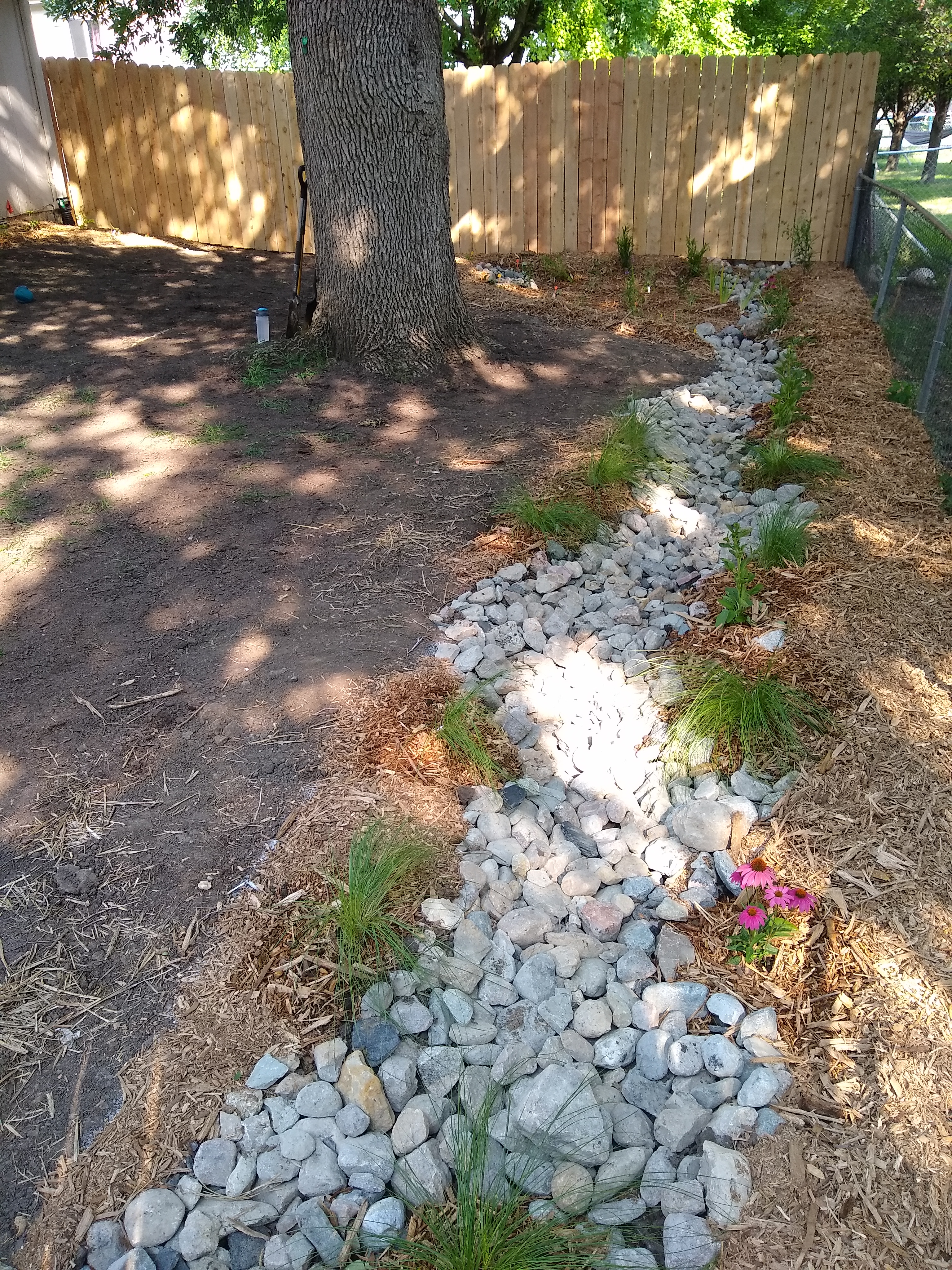
Our solution was to use a dry stream bed to direct water through the low spot, keeping the water in a designated place.  Functional, yet decorative, stone and boulders armored the channel.  Native plants were used along the stream and in the terminal rain garden to mimic the natural appearance of an intermittent stream and vernal pond. 

Although shaded, this area does get some sun, so our palette was limited but not terribly so.  Turtlehead, purple coneflower, blazingstar and sedges were included.  The rain garden will hold and sink most rains, keeping stormwater runoff from other yards and the sewer system or local streams.

Plants waiting to go in

You can see the new cedar privacy fence going in at this stage too.  It matches the one on the other side that we put in several years ago.  Cedar is naturally decay resistant and smells great!
Plantings allow the stream to meander, yet keep the turf edge
straight for ease of care

Finally, the remaining yard was sodded with fescue for quick coverage with a more shade tolerant turfgrass.  We also over seeded with an additional fescue/bluegrass seed blend for resiliency.  Overseeding each Fall with a blend of fescues, some perennial ryegrass, and one that also includes new shade tolerant bluegrass varieties, like Sabre III™, will help maintain this lawn long term.


Native woodland plants were used in the shadier foundation plantings to tie the space together with the woodland edge theme.  Plants included woodland phlox, wild ginger, columbine and ferns.  Corners were softened to make mowing quick and easy.

Stream close-up with echinacea color popping 


Another angle

Rain Garden in the corner, dappled shade